
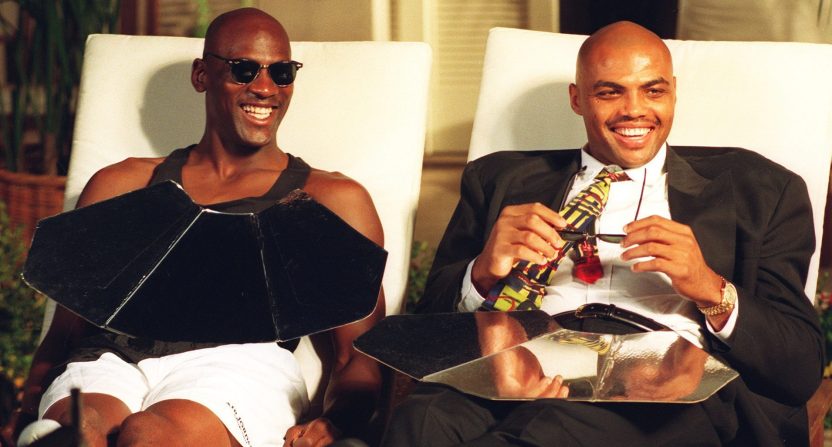
The NBA isn’t just a basketball league— it’s a global cultural powerhouse. Over the years, it has transformed from a professional sports competition into a force, shaping music, fashion, film, and social movements. From iconic players like Michael Jordan and LeBron James becoming international superstars, to the deep-rooted connection between basketball and hip-hop, the NBA has left an indelible mark on the fabric of pop culture.
Whether through unforgettable moments on the court or its powerful influence off the court, the NBA continues to redefine what it means to be a modern celebrity.
Here’s how the NBA has become a cultural phenomenon:
Michael Jordan, often regarded as the greatest basketball player of all time, didn’t just dominate basketball — he redefined what it meant to be a global celebrity. With the help of Nike, Jordan’s Air Jordan sneaker line became an emblem of youth culture in the 1990s, symbolizing both athletic achievement and a sense of exclusivity. The global marketing strategy behind the Air Jordans changed sneaker culture forever, turning sneakers into collectible art rather than just a functional piece of footwear.
It wasn’t just about shoes. Jordan’s charismatic persona and performances on the court captivated millions. His involvement in movies — most famously Space Jam (1996)—cemented his place as not only a basketball legend but also as a pop culture figure. Space Jam mixed the world of cartoons with live-action in a way that resonated with children and adults alike, influencing everything from merchandising to sports entertainment. Oh, and the soundtrack was second to none.
While we’re talking about the greatest of all time, LeBron James has followed a similar, but even more expansive, trajectory. In addition to being an NBA icon, James is also a media mogul, entrepreneur, and activist. His influence extends far beyond basketball; he’s a key player in shaping the intersection of sports and entertainment. He’s in the G.O.A.T debate with Jordan.
James’ ability to diversify his brand — through films like Trainwreck (2015), his production company SpringHill Entertainment, and his commitment to social justice — has made him an even more complex figure in pop culture. He’s a symbol of player empowerment, using his platform to speak on issues of race, education, and inequality.
His recent projects, including his starring role in Space Jam: A New Legacy (2021), have further solidified his role as a pop culture touchstone.

Mural 3
In the 1980s and 90s, basketball and hip-hop came up together. As hip-hop emerged as a dominant cultural force, players like Allen Iverson — who brought street culture into the NBA with his style and attitude — became symbols of this new fusion. Iverson’s braids, tattoos, and bold persona were a reflection of hip-hop’s rebellious spirit, and he became one of the first NBA players to truly embrace the crossover between sports and music.
Artists like Jay-Z, Nas, and Tupac regularly referenced basketball in their lyrics, with Jay-Z even naming his 2009 album The Blueprint 3, a nod to Jordan’s legacy. Jay-Z’s involvement in the Brooklyn Nets’ move to the Barclays Center in 2012 is a testament to how deeply entrenched basketball has become in hip-hop culture. The idea of players and artists being interlaced, both in streetwear and media, remains a key element of how the NBA influences music culture.
Today, the crossover continues. The NBA Finals and All-Star Weekend are often accompanied by exclusive collaborations between NBA teams and music artists, with big-name performers headlining events. Rap stars like Drake, Travis Scott, and Lil Wayne have been spotted courtside, adding to the spectacle and influencing the relationship between the league and urban music culture.
While Jordan’s Space Jam is perhaps the most iconic example of basketball intersecting with Hollywood, the NBA’s cultural impact in films didn’t end there. Other films — such as He Got Game (1998), starring Denzel Washington and Ray Allen – explored basketball’s place in American society and the personal struggles of athletes.
The NBA’s influence on film has been consistent, with players becoming major stars not only on the court but also on the big screen. Kobe Bryant won an Oscar for best animated short film with his Dear Basketball. He became the first former professional athlete to become an Oscar winner, and he also became the first African American to ever win an Oscar in this category.
Television, too, has embraced the NBA. Shows like NBA Rooks and Inside the NBA (starring Charles Barkley, Shaquille O’Neal, and Kenny Smith) offer behind-the-scenes glimpses into the lives of players and coaches, while documentaries such as The Last Dance (2020) have become cultural events, delving into the legacy of Jordan and the Chicago Bulls dynasty.
With the rise of social media platforms like Instagram, Twitter, and TikTok, NBA players now have direct access to millions of fans, giving them the power to influence not only sports but trends across multiple domains.
Players like Kevin Durant, Stephen Curry, and Draymond Green are known for their outspoken views on social and political issues, making them central figures in the broader cultural conversation. Their interactions with fans, media, and other celebrities contribute to how the NBA shapes public opinion and trends.
The NBA has long been a platform for athletes to voice their opinions on social and political issues, and this has only become more pronounced in recent years. The league’s commitment to social justice became especially visible during the 2020 bubble season when players and coaches wore Black Lives Matter shirts, took a knee during the national anthem, and used their platform to push for change.
Stars like LeBron, Kyrie Irving, and Chris Paul have been outspoken in their support for racial equality, and the NBA’s proactive stance on these issues has inspired similar efforts in other sports and beyond. The NBA’s ability to navigate the intersection of sports and activism has helped shape the broader narrative around racial justice and equality in America.
The NBA’s influence on pop culture is undeniable. From the days of Michael Jordan and Magic Johnson, to the current generation of stars like James, Curry, and Giannis Antetokounmpo, the league has shaped global music, fashion, film, and social movements.

The fusion of basketball with broader cultural trends made the NBA more than just a sports league— it has become a cultural institution that defines generations. Whether through the iconic style of players, their influence on music and fashion, or their role in social and political activism, the NBA continues to be a powerful driver of pop culture today and will certainly remain so for years to come.

About Jessica Kleinschmidt
Jess is a baseball fan with Reno, Nev. roots residing in the Bay Area. She is the host of "Short and to the Point" and is also a broadcaster with the Oakland A's Radio Network. She previously worked for MLB.com and NBC Sports Bay Area.